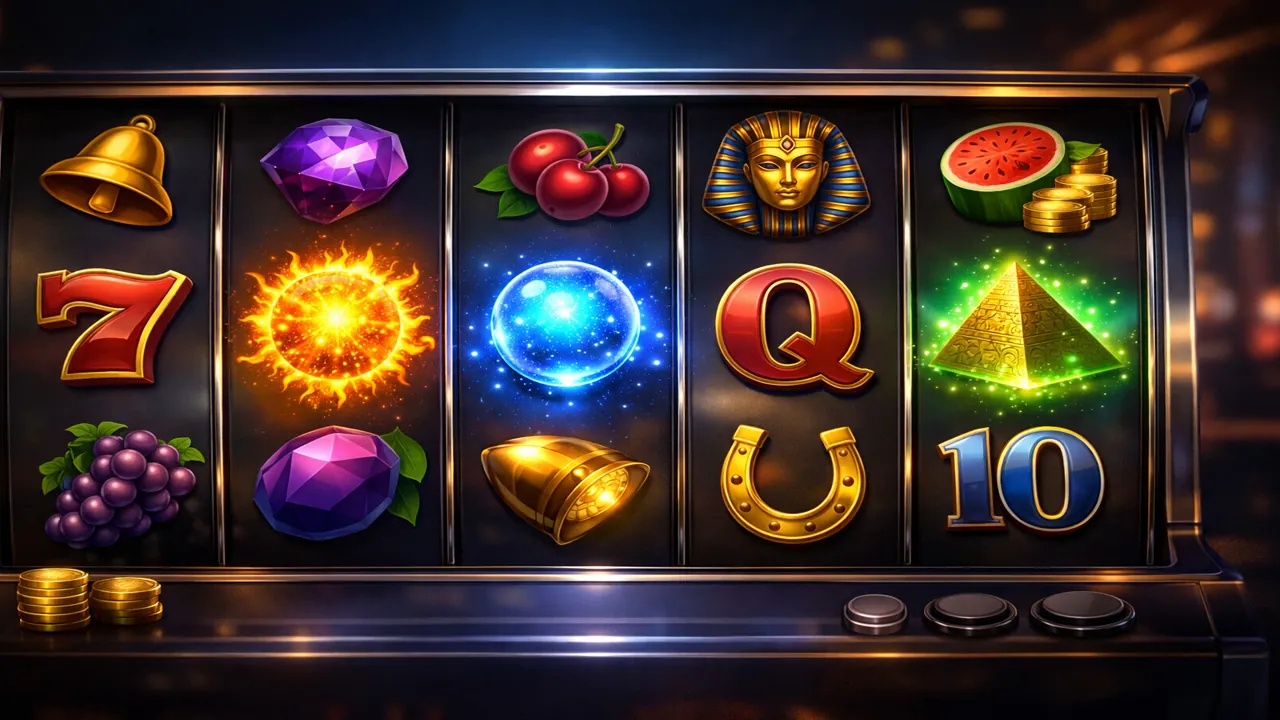
If you’ve ever opened a modern slot and noticed a symbol that seems to matter even when it doesn’t land on a payline, you’ve already met the idea behind a scatter. Many players first encounter it while browsing guides like https://legalcasino.uk/free-slots/scatter/, but the real value of a scatter symbol only becomes clear when you understand how it changes the internal logic of a slot round rather than just adding another icon to the reels.
At a basic level, a scatter symbol is designed to break the usual rules of slot evaluation. It does not rely on left-to-right alignment or fixed paylines. Instead, it activates features or payouts based on how many appear anywhere on the screen. That single difference explains why scatters are central to free spins, bonus rounds, and the volatility profile of many popular games.
The Core Function of a Scatter Symbol
In traditional slots, wins are calculated through paylines. A scatter bypasses that structure. When a game requires three scatters to unlock a feature, it does not matter where they land, as long as they appear in the same spin.
This mechanic has a direct design purpose. Developers use scatters to introduce events that feel irregular but controlled. Free spins triggered by scatters typically occur at predictable statistical intervals. For example, many online slots are tuned so that a free-spin feature appears roughly once every 120–180 spins, depending on volatility. The scatter symbol is the technical switch that makes this possible without disrupting the payline math.
From a player’s perspective, this creates two consequences. First, every reel position matters when a scatter is in play. Second, spins that would otherwise be “dead” can still carry value if a scatter lands.
Why Scatters Are Not Just Another High-Value Symbol
A common misunderstanding is to treat scatters as premium symbols similar to wilds. In reality, they serve a different mathematical role.
Wild symbols modify combinations. Scatters modify the state of the game. When a scatter appears, it often changes what the next spins look like, how multipliers behave, or how the reel set is evaluated. This is why scatters are rarely substituted by wilds and are usually immune to substitution themselves.
In practical terms, a scatter’s payout, if it has one, is often secondary. Many games pay a small fixed amount for two or three scatters but reserve the real impact for feature activation. This design choice keeps base game volatility under control while allowing sharp swings during bonus rounds.
Common Scatter-Triggered Features
Before listing anything, it helps to understand why developers tie features to scatters instead of random triggers. Scatters allow features to be visible in advance. When two scatters land, the third reel becomes emotionally charged without altering the RNG.
After that transition, the most common outcomes tied to scatters are:
- Free spins with altered reel sets, often with added wilds or expanded symbols.
- Bonus rounds that switch the game to a different screen with independent rules.
- Multipliers that activate globally for the duration of the feature rather than per line.
- Symbol upgrades, where lower-value icons are replaced by higher-value ones during free spins.
These outcomes are not interchangeable. Free spins extend playtime, while bonus rounds compress variance into fewer decisions. The choice reflects the volatility target of the game.
Scatter Symbols and RTP Distribution
Return to Player is often discussed as a single number, but scatters strongly influence how that return is distributed. In many slots, 60–70% of total RTP is delivered during bonus features rather than the base game. Scatters are the gatekeepers of that RTP portion.
This has a practical implication. A slot with frequent scatters but modest bonus payouts feels very different from one with rare scatters and explosive bonuses, even if both advertise the same RTP, such as 96%.
The table below shows how scatter frequency typically correlates with volatility in modern online slots.
| Scatter trigger rate (approx.) | Typical volatility profile | Bonus impact on RTP |
|---|---|---|
| 1 in 80–120 spins | Low to medium | 40–55% |
| 1 in 120–180 spins | Medium | 55–70% |
| 1 in 200+ spins | High | 70% or more |
This is not a rulebook but a pattern seen across multiple studios. Understanding it helps explain why some games feel “quiet” for long stretches before a feature finally appears.
Fixed vs Progressive Scatter Requirements
Not all scatters behave the same way. Some games require a fixed number of scatters, usually three. Others scale rewards based on how many appear.
Fixed requirements simplify expectations. Three scatters trigger the feature, two do nothing. Progressive systems are more flexible. Two scatters may pay a small amount, three unlock free spins, and four or five increase the number of spins or add a multiplier.
From a design standpoint, progressive scatter systems smooth player experience. They reduce the sense of wasted near-misses and help regulate volatility without increasing RTP.
Scatter Placement and Reel Weighting
Scatter symbols are not evenly distributed across reels. In most slots, the middle reels have higher scatter weighting than the first and last. This is deliberate.
By concentrating scatters on central reels, developers create frequent two-scatter scenarios without dramatically increasing the trigger rate of full features. The player sees potential without the math becoming unstable.
This also explains why many slots visually emphasize reel three or four when two scatters are already on screen. The animation reinforces anticipation, even though the underlying probability remains unchanged.
The Relationship Between Scatters and Near-Miss Psychology
Near-miss effects are often discussed vaguely, but scatters make them measurable. When a game is tuned so that two scatters appear more often than three, the player experiences repeated almost-wins.
Regulators monitor this closely. In many jurisdictions, including the UK, developers must demonstrate that near-miss frequency does not misrepresent actual odds. As a result, modern slots tend to balance scatter visibility with transparent feature rules, clearly stating how many are required and what they do.
For players, the practical takeaway is simple. A screen full of two scatters does not mean the third is “due.” It only means the game is working as designed.
Scatter Symbols in Megaways and Cluster Slots
Scatter behavior changes significantly in non-traditional formats.
In Megaways games, scatter counts scale with reel height. A single reel can display multiple scatter symbols, making high scatter counts possible in one spin. This increases feature variability but also widens the gap between average and maximum outcomes.
In cluster-pay slots, scatters often coexist with avalanche mechanics. Instead of triggering immediately, they may lock in place while symbols collapse around them. This creates compound probability layers, where one scatter increases the chance of another appearing before the spin resolves.
These formats illustrate that a scatter is not a static concept. It adapts to the payout engine beneath it.
Reading a Paytable to Understand Scatter Value
Many players skip paytables, but scatter information is one of the few sections worth reading carefully. It usually answers three critical questions: how many scatters are required, what they pay directly, and what features they unlock.
Look for wording about retriggers, multipliers during free spins, and whether scatters can appear during bonus rounds. In some games, scatters are disabled once a feature starts. In others, they can retrigger additional spins, significantly changing expected value.
Practical Advice for Interpreting Scatter-Heavy Games
Before summarizing, it helps to connect theory to actual play decisions.
Slots with prominent scatter mechanics tend to reward patience rather than constant bet changes. Increasing stakes does not make scatters more likely; it only scales the payout when they arrive. If a game’s appeal rests almost entirely on its bonus round, understanding scatter frequency matters more than chasing short-term results.
Players who prefer steady feedback often gravitate toward games with lower scatter thresholds or frequent retriggers. Those comfortable with long dry spells usually accept higher thresholds in exchange for larger bonus potential.
Why Scatter Symbols Remain Central to Slot Design
Scatters endure because they solve multiple design problems at once. They allow features to exist without rigid paylines, they control volatility without distorting RTP, and they give players a visible sense of progress without changing odds.
Understanding how a scatter symbol works does not improve luck, but it does improve clarity. You start recognizing why certain games feel generous, why others feel tense, and how bonus features are paced over time. That awareness is what separates informed play from blind spinning.